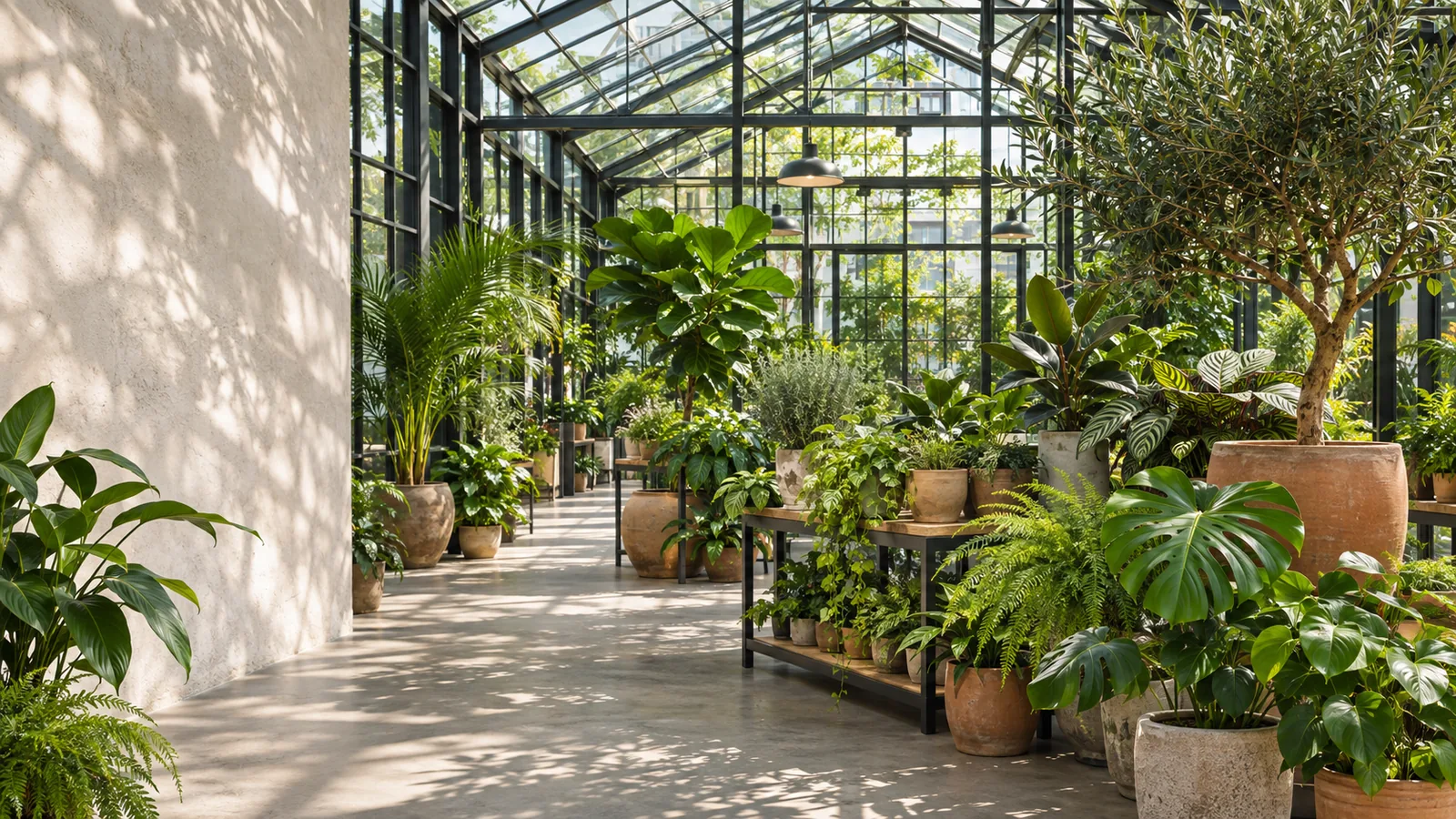
Plants read differently in a room when you sort them by habit — height at the crown, line along a shelf, or the slow geometry of a single rosette.
Upright
Tall canopies and columnar stems that anchor a corner without spreading wide.
Single-trunk forms that draw the eye up toward the ceiling line.
Clustered canes that read as a green screen behind seating.
Narrow leaves that stay crisp in bright indirect light.
Trailing
Cascades that soften shelves, mantels, and high hooks on a balcony.
Long runners that can be trained along a rail or trellis.
Small-leafed strands for shallow pots and tight ledges.
Heavier stems that benefit from a sturdy rim and wide base.
Sculptural
Rosettes, fans, and asymmetric growth that behave like quiet sculpture.
Thick leaves that store water and forgive missed drinks.
Radial forms that look deliberate on a low table.
Slow movers that reward rotation each week for even light.
Leaves layered under glass — habit shows in height, drape, and shadow.
Pairing habit with vessel
Upright plants ask for depth; trailers want a ledge or a hook; sculptural forms often shine in a low, wide bowl. When you match silhouette to container, watering rhythm becomes easier to read.