Planter forms
Planters as architecture for roots
A pot is a room: floor for drainage, walls for breath or hold, rim for the hand — geometry and material tell you how a planter will live with roots and rail weight.
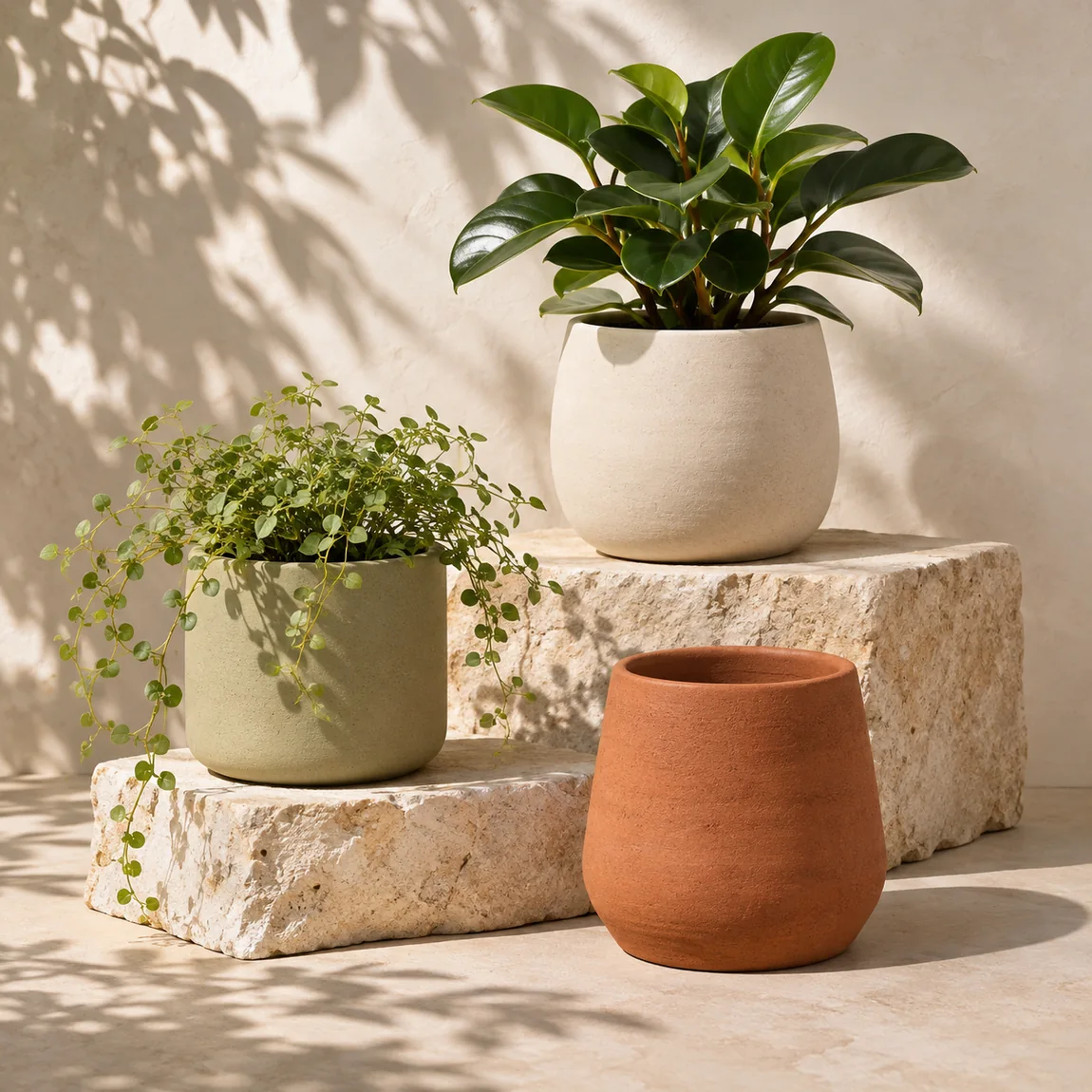
Forms
- Cylinders — depth for upright habits and taproots that want to descend.
- Low bowls — wide surface for sculptural rosettes and shallow rooting.
- Tall cubes — clean lines against limestone walls; pair with a saucer.
- Wall pockets — vertical texture on railings; mind the weight when wet.
Materials & color
Terracotta pulls water through its walls — honest drying for Mediterranean herbs and succulents. Glazed stoneware keeps moisture longer for steady drinkers. Fiber and paper pots ease transplant shock when seedlings graduate.
Color reads as part of the room: chalk whites against forest ink, restrained terracotta as punctuation, and leaf-green plants doing the rest of the work.